
By programme end, participants will be able to:
1. Apply calibration practices ensuring reliable measurements for device repair/testing (ISO 13485-aligned).
2. Use risk-based decisions for what to calibrate, intervals, and out-of-tolerance responses.
3. Demonstrate GMP habits via documentation, traceability, and data integrity in records.
4. Work safely by selecting task-appropriate PPE for electrical, chemical, and mechanical hazards.
Day 1 – Calibration foundations & GMP in practice
Morning
* Why calibration matters in your work (device performance, patient safety, customer trust).
* GMP & ISO 13485 essentials for engineers: “Do it right / Document it / Prove it”; ALCOA for calibration records.
* Calibration basics: calibration vs verification, accuracy, precision, tolerance, uncertainty; what really needs calibration in a service centre.
* Case Study: The Uncalibrated Torque Wrench – technical consequences, GMP implications, and simple prevention.
Afternoon
* Equipment identification and control: IDs, labels, status, next‑due dates, practical registers in a legacy environment.
* Traceability: linking tools → calibration status → specific jobs and devices.
* Internal vs external calibration and interval setting: risk, capability, and data‑driven decisions.
* Case Studies:
1. The Missing Calibration Label – can we trust this tool today?
2. Internal Calibration Gone Wrong – impact on devices, system changes.
* Reflection: one calibration control improvement per engineer.
Day 2 – Applied calibration, risk & safety
Morning
* Tolerances, accuracy and risk: how misinterpreted specs lead to wrong pass/fail decisions.
* Case Study: Tolerance Misinterpretation – analysing technical risk and strengthening instructions/checks.
* Handling out‑of‑calibration / expired equipment: practical steps for stopping use, assessing impact, and planning re‑checks or other actions.
* Case Study: Expired Gauge Used on 20 Devices – mapping impact, defining a realistic response plan.
Afternoon
* Designing a calibration and equipment control system that works in your environment: ownership, scheduling, certificate access, built‑in daily checks.
* Workplace safety in calibration & repair: WSH basics applied to electrical testing, chemical cleaning, sharp instruments and repetitive work; task‑based PPE selection.
* Case Study: Improper PPE During Cleaning – fixing planning, training and workplace cues, not just PPE choice.
* Integration Exercise: Your Workstation & Process Review – participants map tools, calibration status and safety practices; each proposes 3 concrete improvement actions.
* Closing: key takeaways, post‑quiz, and personal action commitments.
Delivery Approach
* Approx. 30% concepts / 70% application through real‑world case studies, small‑group work and workstation‑style exercises.
* Examples and discussions will be tailored to Olympus’ repair and calibration operations and existing systems (paper/electronic), using your SOPs and risk assessments where available.
* The programme is aligned with ISO 13485 calibration requirements and general GMP and WSH principles, but is positioned to help engineers make better technical, quality and safety decisions in their daily work, not to train them as auditors.
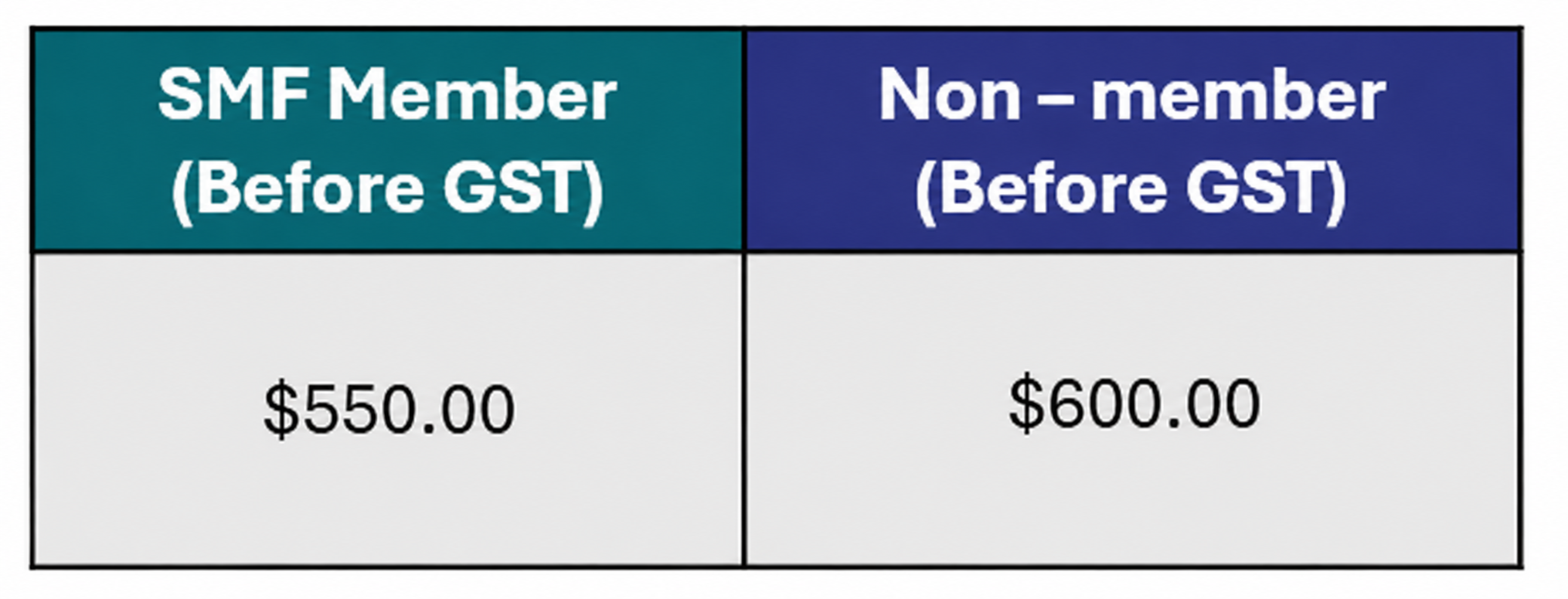
*Course fees before GST
Note that purchases of goods and services from GST-registered businesses will be subject to GST at 9% GST. The GST amount calculated will be based on full course fees.
• Diploma and above
• A minimum of 3 years working experience in medical device industry
• Language proficiency is English, at GCE N’ Level
An applicant must be at least 18 years of age on admission to the programme.
1. All notice of withdrawal must be given in writing before the issuance of letter of confirmation. Once confirmation letter is sent to participant, no cancellation will be allowed or penalty charges will apply.
If notice of withdrawal is received:
– At least 1 week before commencement of the course, a 20% of the full course fee will be charged. For government-funded course, a 20% of full course fee before funding will be charged.
– Less than 1 week before commencement of the course, a 30% of the full course fee will be charged. For government-funded course, a 30% of full course fee before funding will be charged.
– No show on the scheduled date, a full course fee will be levied. For government-funded course, a full course fee before funding will be charged.
2. For all government-funded programmes (WSQ & Non-WSQ), funding is only applicable to:
– Singapore Citizens or Singapore Permanent Residents
– Participants who have achieved at least 75% attendance and passed all required assessments
Full course fee will be charged to participants who fail to meet the above-mentioned criteria.
3. When a course is cancelled, fail to commence or fail to complete under unforeseen circumstances, participant is allowed to defer the intake at no cost or withdraw from the course; under such situation, a full refund of the advance payment will be given.
4. Notice of change in participant’s name must be given in writing, not less than 5 days before the course commencement date.
5. SMF CCL reserves the right, at our sole discretion, to change, modify or otherwise alter these terms and conditions at any time. Such modifications shall become effective immediately upon the posting thereof.
6. SMF Centre for Corporate Learning Pte Ltd has a Data Protection Policy which provides more information about how we collect, use and disclose your personal data. Please click the link below to know more.
https://smfccl.sg/privacy/
1. The candidate has the right to disagree with the assessment decision made by the assessor.
2. When giving feedback to the candidate, the assessor must check with the candidate if he agrees with the assessment outcome.
3. If the candidate agrees with the assessment outcome, the assessor & the candidate must sign the Assessment Summary Record.
4. If the candidate disagrees with the assessment outcome, he/she should not sign in the Assessment Summary Record.
5. If the candidate intends to appeal the decision, he/she should first discuss the matter with the assessor/assessment manager.
6. If the candidate is still not satisfied with the decision, the candidate must notify the assessor of the decision to appeal. The assessor will reflect the candidate’s intention in the Feedback Section of the Assessment Summary Record.
7. The assessor will notify the assessor manager about the candidate’s intention to lodge an appeal.
8. The candidate must lodge the appeal within 7 days, giving reasons for appeal together with the appeal fee of $109.00 (inclusive of 9% GST).
9. The assessor can help the candidate with writing and lodging the appeal.
10. The assessment manager will collect information from the candidate & assessor and give a final decision.
11. A record of the appeal and any subsequent actions and findings will be made.
12. An Assessment Appeal Panel will be formed to review and give a decision.
13. The outcome of the appeal will be made known to the candidate within 2 weeks from the date the appeal was lodged.
14. The decision of the Assessment Appeal Panel is final and no further appeal will be entertained.
15. Please click the link below to fill up the Candidates Appeal Form.